
A World of Color
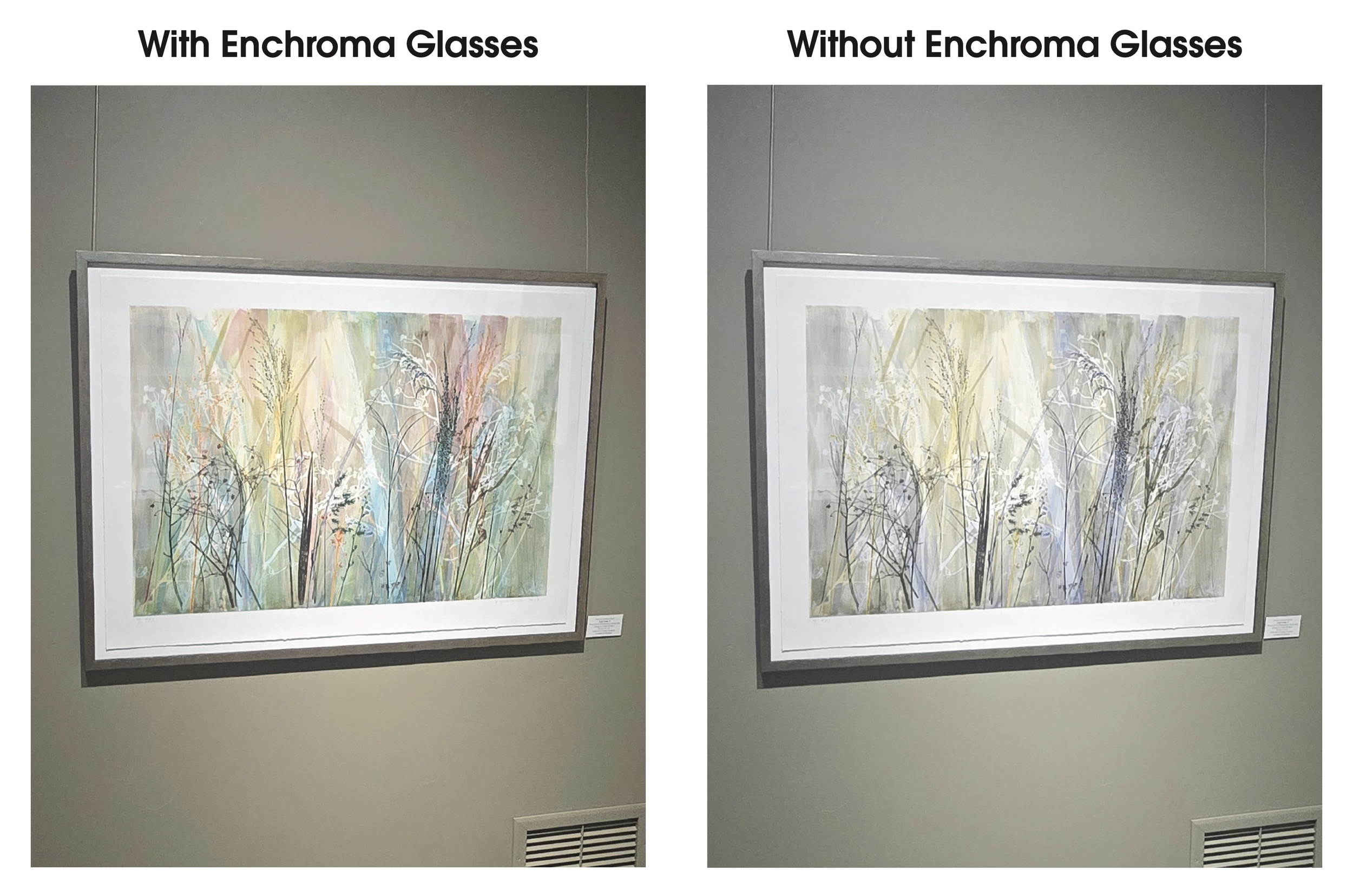
A mockup of one of the pieces at Steamboat Art Museum with and without Enchroma's colorblind glasses. By Kenny McCarthy.
The Steamboat Art Museum just got a little more colorful. Thanks to a partnership with Enchroma, a company that specializes in creating glasses that allow colorblind people the ability to see the full spectrum of colors, three members of the community were able to experience art in a way they never have before.
Early testers of the glasses included Rick Wodnik and father/daughter duo Michael and Maggie Gould. Through the rose-colored lenses, they checked out pieces from SAM’s current exhibit, “The Art of Printmaking: Process and Passion.” Their reactions to the glasses gave a new perspective on the invisible limitations that colorblind people deal with on a daily basis.
Rick, Michael and his nine-year-old daughter Maggie, are all diagnosed with red-green colorblindness. Rick and Michael were in grade school when they realized that they saw differently than others around them. They eventually got used to the dimmed hues and shades that colorblindness offered.
But when they put the glasses on, their reaction was immediate. “The art is more vibrant, more exciting and much brighter,” Rick says. Walking around the exhibit, the trio took to examining each piece of art both with and without the glasses, explaining the differences as they went. Greens were easier to see, reds were brighter, the purples really popped, and even certain paintings had different feelings to them.
“It’s not the craziest difference in the world but it makes you think on a fundamental level about the concept of consciousness,” Michael says. “We all experience so much of the same thing and yet our worlds can be completely different.”
The museum’s collaboration with Enchroma served as a powerful reminder that art – and life – is experienced uniquely by everyone. “Having these glasses available for visitors allows us to create inclusivity in an area rarely given consideration," says Dancy St. John, SAM's exhibit curator. "It supports SAM’s fundamental principle of accessibility for all.”